The best spice organization system for a small kitchen is the one that keeps your most-used jars visible, close to the prep zone, and easy to return after cooking. Start with the space you already have, measure it, and choose one renter-safe zone instead of spreading spices across the counter, a drawer, and three cabinets.
You do not need a matching jar collection or a large pantry to fix the problem. In most small kitchens, the real friction is not the number of spices. It is the repeated search: moving bottles to find cumin, buying a duplicate because paprika disappeared behind taller jars, or losing the only useful patch of counter space to a rack that looked tidy in a photo.
This guide gives you five renter-safe spice storage systems, a no-buy audit, and a simple decision table so you can choose the smallest change that makes cooking easier.
Start with one spice zone, not more containers
Get the free Kitchen Reset Workbook
Use the workbook to map one calmer kitchen system before buying more tools.
Free 18-page workbook. Occasional useful emails. Unsubscribe anytime. Privacy policy.A useful spice zone has three rules: you can see the jars you use, reach them without moving a pile, and put them back in one motion. If a system looks organized but adds a decanting project, blocks a cabinet hinge, or takes over the prep counter, it has not earned its space.
Keep storage conditions in mind before choosing a location. McCormick recommends storing spices tightly capped in a cool, dry place away from heat, moisture, and direct sunlight. It specifically advises against storage above the stove or sink. That means the most visually convenient spot is not always the best long-term home.
Run this 10-minute no-buy spice audit
Before ordering an organizer, empty your current spice area and make four quick decisions.
- Remove obvious duplicates and expired experiments. Keep the jars you actually cook with visible. Move rarely used baking or specialty spices into a secondary zone.
- Group by cooking behavior. Put weeknight essentials together instead of alphabetizing every jar. A small daily group is easier to maintain.
- Measure the available slot. Record drawer height, cabinet width, shelf depth, door clearance, and the side width of the refrigerator if you are considering a magnetic rack.
- Test with something you already own. Use a low tray, shoebox lid, existing bin, or a single shelf to test the return path for one week.

Five renter-safe spice organization systems for small kitchens
1. Use a shallow drawer for your daily spices
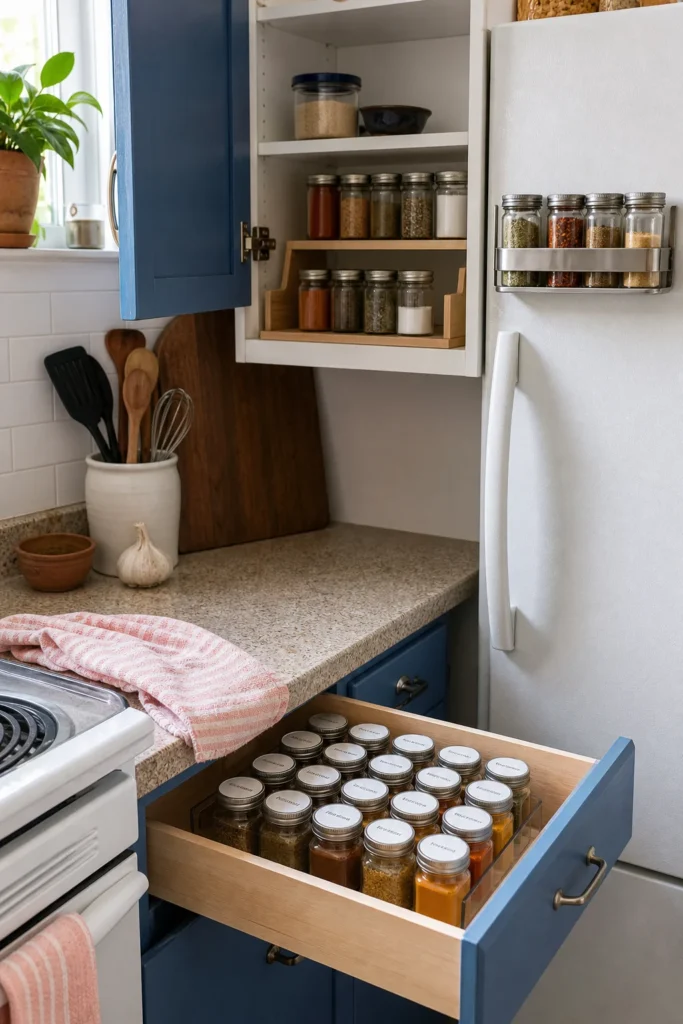
A shallow drawer is the cleanest first choice when the jars fit without forcing the drawer closed. Lay jars in a low tray or use a simple drawer insert so labels remain visible and bottles do not roll every time you open the drawer.
This system keeps the counter clear and makes duplicate buying less likely because you can scan the whole daily set at once. It also works with original jars, which means you do not have to create a full decanting routine to maintain it.
Best for: cooks with one available shallow drawer near the prep zone.
Skip it when: jar height prevents the drawer from closing comfortably.
2. Add one tiered riser inside a cabinet
A cabinet shelf riser can improve visibility without creating another surface to clean. Put taller jars toward the back and the small daily group toward the front. Keep the arrangement shallow enough that you can remove one jar without lifting a row of bottles.
If you already use the four-zone reset under the sink, the same principle applies here: retrieval matters more than squeezing in the maximum number of items.
Best for: a cabinet with unused vertical clearance.
Skip it when: the shelf is too deep and jars still disappear behind one another.
3. Use the inside of a cabinet door carefully
A cabinet-door spice rack can make a small group of jars easy to reach, but it only works after a clearance check. Close the door slowly before mounting anything permanently. The rack must not hit the cabinet shelves, block the hinge, or make the door feel heavy.
Use this for a short list of lightweight jars, not your entire collection. A renter-safe system should be removable and should respect the mounting instructions for the chosen surface.
Best for: light, frequently used spices and a cabinet door with clear interior space.
Skip it when: the shelves sit flush with the door or the hinge movement becomes strained.
4. Turn the side of the refrigerator into a compact spice zone
A magnetic fridge-side rack can recover unused vertical space without drilling. Keep it on the side of the refrigerator, away from stove heat and sink moisture, and use it only for the jars you reach for constantly.
This works especially well in a rental where wall storage is limited. It follows the same deposit-safe logic as the renter-safe kitchen hacks guide: use reversible storage only where it improves the workflow.
Best for: an exposed fridge side that stays cool, dry, and easy to reach.
Skip it when: the refrigerator sits beside the range or the rack would interfere with a walkway.
5. Create a removable rail for the smallest daily set
If the drawer, cabinet, and fridge side are unavailable, use a short removable rail or narrow renter-safe shelf for the spices you use most often. The goal is not to display everything. It is to give five or six daily jars a reliable return path.
Keep it outside the splash zone and away from heat. Check the mounting instructions and surface compatibility before using any removable adhesive solution.
Best for: a stable cabinet side or wall section outside the cooking and washing zones.
Skip it when: the surface is textured, warm, damp, or likely to be damaged by the mounting method.
Which spice storage system should you choose?
| Available space | Start with | Measure first |
|---|---|---|
| One shallow drawer | Low tray or drawer insert | Jar height and drawer clearance |
| Cabinet with vertical room | One tiered shelf riser | Width, depth, and reachable height |
| Clear cabinet door interior | Lightweight door rack | Door swing, hinge movement, shelf clearance |
| Exposed refrigerator side | Compact magnetic rack | Rack width, walkway clearance, distance from heat |
| Small stable wall or cabinet side | Short removable rail | Surface compatibility and weight limit |
The small-kitchen rule: keep the counter available for prep
Counter space is more valuable than display space in a compact kitchen. If a countertop spice rack takes over the place where you chop vegetables or assemble dinner, it creates a new problem while solving the old one.
Protect the prep surface first. The small kitchen prep-station setup works because each item has a role and a return path. Your spice system should support that station, not compete with it.
When you are deciding whether an organizer belongs in the kitchen, use the same test as the small-kitchen tool audit: buy only when a repeated workflow problem survives the no-buy test.
Keep the spice zone working with a three-minute weekly reset
A spice organizer only helps if the return path stays simple after a busy dinner. Add this small check to your normal kitchen reset instead of waiting for the cabinet to become a search problem again.
- Return stray jars. Move any bottle left on the counter back into the daily or secondary zone.
- Scan for low or duplicate jars. Add a replacement to the grocery list before buying another container.
- Wipe the tray or shelf. A quick clean makes it easier to notice spills and keeps the system pleasant to use.
- Question new additions. If a spice does not fit, decide whether it belongs in the daily zone before expanding the storage footprint.
This is the same maintenance logic behind the 30-minute Sunday kitchen reset: protect a calm return path with a small recurring routine.
Frequently asked questions
What is the best way to organize spices in a small kitchen?
Choose one visible, easy-to-return spice zone near your prep area but away from heat and moisture. Start with a shallow drawer or a cabinet riser before adding new storage hardware.
Should spices be stored next to the stove?
No. Store spices tightly capped in a cool, dry place away from heat, moisture, and direct sunlight. Avoid storage above the stove or sink.
Do I need matching jars for spice organization?
No. Original jars can work well in a drawer tray, shelf riser, or compact rack. A system that you can maintain is more useful than a matching set that creates extra decanting work.
How do I organize spices without drilling holes?
Use an existing drawer, a freestanding cabinet riser, a compact magnetic rack on a suitable refrigerator side, or a removable mounting method that is compatible with your surface and the organizer’s weight.
How many spices should stay in the daily zone?
Keep the jars you reach for during normal weeknight cooking in the daily zone. Move specialty and seasonal spices to a secondary area so the main group remains easy to scan and return.
Reset the system before you buy the organizer
The right spice organization system is not the one that stores the most jars. It is the smallest renter-safe setup that keeps your daily spices visible, protects the prep counter, and makes the return path obvious after cooking.
Use the free Kitchen Reset Starter System to map the friction, test a no-buy version, and decide which tools actually earn their space.
Optional tools referenced in this system
Spice Drawer Tray
Best for: A drawer that can close comfortably after measuring jar height
Keeping frequently used jars visible in one shallow drawer without decanting everything
Editorial slot prepared. Recommendation link pending affiliate approval.
Shelf Riser
Best for: Small cabinets and rental kitchens
Using vertical cabinet space before adding more containers
Editorial slot prepared. Recommendation link pending affiliate approval.
Cabinet-Door Spice Rack
Best for: Lightweight spices when door clearance and hinge movement have been checked
Using the inside of a cabinet door for a small, intentional group of jars
Editorial slot prepared. Recommendation link pending affiliate approval.
Magnetic Fridge-Side Spice Rack
Best for: Frequently used jars when the fridge side is clear and the rack stays away from heat
Turning unused refrigerator-side space into an accessible spice zone without drilling
Editorial slot prepared. Recommendation link pending affiliate approval.
Removable Spice Rail
Best for: A stable wall or cabinet-side surface with an appropriate removable mounting method
Creating a renter-safe return path for a short list of daily spices
Editorial slot prepared. Recommendation link pending affiliate approval.