
A pantry inventory checklist is the simplest way to make a small kitchen pantry more useful before buying another bin, basket, or matching container. When a pantry feels chaotic, the instinct is often to shop for organizers. But the real problem is usually less glamorous: food is difficult to see, duplicate groceries collect in different places, and the shelf measurements are still unknown.
This reset gives you a better order of operations. First, see what you own. Then group the food around the way your kitchen actually works. Measure the shelves. Only after that should you decide whether any organizer earns space.
Do not buy containers to discover your pantry system. Build the system first, then buy only the few products that make it easier to maintain.
Why a pantry inventory checklist comes before containers
Get the free Kitchen Reset Workbook
Use the workbook to map one calmer kitchen system before buying more tools.
Free 18-page workbook. Occasional useful emails. Unsubscribe anytime. Privacy policy.A pantry can look untidy and still work well. It can also look beautifully decanted and create daily friction. The difference is visibility. A useful pantry lets you answer three questions without digging:
- What food do I already have?
- What should be used next?
- What is actually missing from the grocery list?
This matters beyond appearance. The U.S. Environmental Protection Agency recommends checking the refrigerator, freezer, and pantry before shopping so you avoid buying food you already have. Its guidance on preventing wasted food at home also encourages planning meals around food that needs to be used first.
The same principle applies to containers. Buying a collection of bins before checking your real inventory often creates new problems: the cereal bin is too tall for the shelf, the snack basket hides open packages, or a narrow apartment cabinet loses usable width to organizer walls.
KitchenFound starts with the workflow. The goal is not a showroom pantry. The goal is a pantry that makes the next meal and the next grocery trip easier.
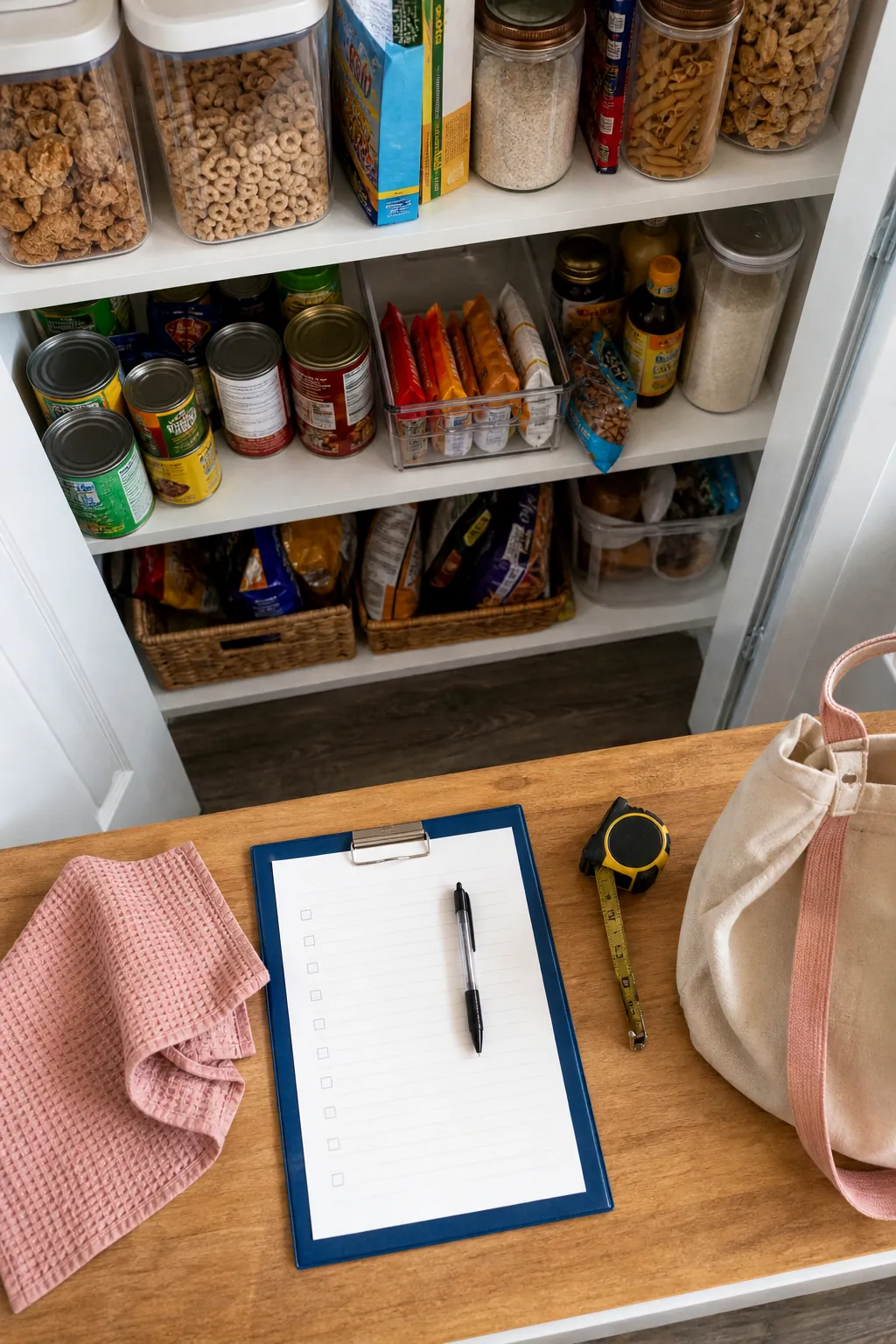
The 20-minute pantry inventory checklist
This pantry inventory checklist is intentionally small enough to finish before a grocery run. You do not need to empty the entire kitchen or buy a label maker. Set a timer, choose one pantry cabinet or shelf group, and work through the sequence.
Minutes 0-3: define the pantry boundary
Decide which storage area you are resetting. In a tiny kitchen, the “pantry” may be one tall cabinet, two upper shelves, a rolling cart, or a mix of food cupboards. Avoid expanding the project while you work. If spices, baking tools, or backup paper goods live elsewhere and function well, leave them alone today.
My pantry boundary is: ____________________. The one result I want from this reset is: ____________________.
Minutes 3-7: surface duplicates and open packages
Remove only the items you cannot see clearly. Look for duplicate cans, open bags, nearly empty boxes, and food tucked behind taller packages. Place similar items together on the counter or table. You are not styling the pantry. You are making the hidden inventory visible.
If the pantry shares a wall with your fridge, use the same visibility logic as The 15-Minute Fridge Reset: put food that needs attention where it can influence the next meal.
Minutes 7-11: sort into five practical groups
Group food according to how it enters your cooking routine. The five pantry zones below work in most small kitchens because they are broad enough to maintain but specific enough to scan quickly.
Rice, pasta, grains, noodles, tortillas, and shelf-stable staples that begin a meal.
Beans, tomatoes, sauces, broths, spreads, and preserved ingredients you want to see before shopping.
Oats, cereal, crackers, bars, nuts, and grab-and-go food used often enough to deserve an easy reach.
Flour, sugar, baking supplies, and less frequent ingredients that can live outside the prime shelf position.
A small, limited home for useful duplicates. Backstock is not permission to hide overflow.
Minutes 11-15: fill the inventory list
Write only the information that changes your next decision. Your list does not need every ounce or expiration date. It needs enough detail to stop duplicate purchases and surface the food you are likely to forget.
- Use first: open packages, fragile items, and food with a near-term date.
- Running low: staples you use regularly and truly need to replace.
- Enough for now: food you already own in a usable quantity.
- Stop buying: duplicates, aspirational ingredients, or bulk items with no clear plan.
Minutes 15-18: create one visible use-first zone
Choose one shelf section, shallow basket, or front-facing row for food that should shape the next meals. This is the pantry version of an eat-first fridge shelf. It might hold an open bag of lentils, a half-used pasta shape, tortillas, or a jar of sauce that has been waiting for a plan.
The use-first zone should be easy to scan and easy to reset. Avoid deep bins that turn into a second hidden pantry. A shallow basket works only when you can see its contents without unloading it.
Minutes 18-20: write the grocery list and stop
Add the true gaps to your grocery list. Do not shop for organizers yet. The pantry needs to work for at least one normal week before you can see which friction remains.
If you are unsure how long a shelf-stable ingredient should be kept, the official FoodKeeper app from FoodSafety.gov provides storage guidance for food and beverages. Use food-safety guidance rather than guessing from appearance alone.
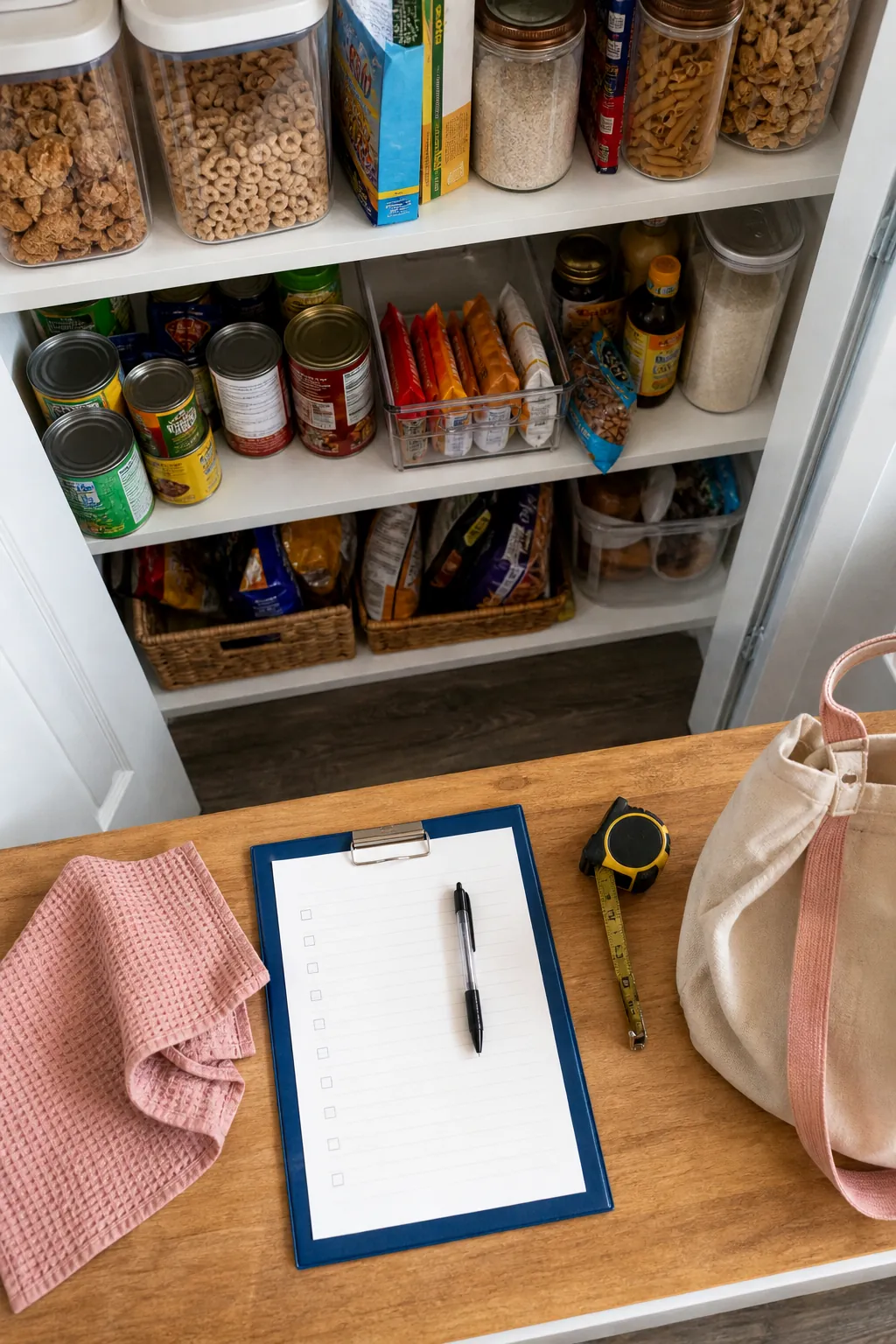
What not to do during a pantry reset
A small pantry is easy to overengineer. The more steps a system requires, the less likely it is to survive a busy grocery day. Avoid these common mistakes:
- Do not decant every ingredient at once. Decant only a staple that you buy repeatedly, can identify easily, and use often enough to justify the extra step.
- Do not use opaque bins for food you regularly forget. A basket may look tidy while quietly hiding three open packages.
- Do not create a separate zone for every ingredient. Five maintainable groups beat fifteen tiny categories that fall apart after one week.
- Do not turn backstock into a second pantry. Keep intentional duplicates limited and visible.
- Do not copy a large-pantry layout into a narrow cabinet. Use the footprint you actually have, not the one in a showroom photo.
A useful test is simple: can another person in the household put groceries away without asking where everything belongs? If the answer is no, simplify the zones.
Connect pantry inventory to weekly meal planning
The pantry inventory checklist becomes much more valuable when it shapes a few meals. Before writing a complete grocery list, look at the use-first zone and choose one meal anchor. A can of beans, a half-used bag of rice, pasta, or tortillas can become the starting point for a realistic weeknight plan.
Use this three-question sequence:
- Which pantry ingredient should be used first?
- Which fridge or freezer ingredient pairs with it?
- What is the smallest grocery gap that turns those ingredients into a meal?
This reduces decision fatigue and makes the grocery list more honest. You are buying the missing bridge ingredients, not starting from zero. If your kitchen still feels improvised at dinner time, combine this pantry scan with a small meal-anchor routine rather than adding more storage products.
Measure before buying pantry organizers
After one week, you may discover that a product would genuinely help. Measure before browsing. In small kitchens, a few centimeters can decide whether an organizer improves access or steals shelf space.
Write down these measurements:
- Usable shelf width: measure around hinges, trim, and cabinet lips.
- Usable shelf depth: check whether the cabinet door closes comfortably.
- Clear height: measure the shortest point if a shelf, frame, or hinge interrupts the space.
- Access pattern: note whether you reach from the front, pull a basket out, or need to see the item at eye level.
The same measurement-first rule belongs in every compact-kitchen system. If your counter is the bigger problem, start with The Small Kitchen Prep Station Setup. If you rent and need reversible storage, use The 8 Renter-Safe Kitchen Hacks That Won’t Lose Your Deposit.
Tool slots that may earn pantry space
These are tool slots, not a required shopping list. Add a product only when your pantry inventory checklist reveals a repeated problem that the product can solve.
Best for: a visible use-first zone or lightweight snack group. Avoid: deep baskets that hide old packages.
Best for: short cans or jars when empty vertical space is the real constraint. Avoid: stacking so high that the back row disappears.
Best for: a small group of jars or sauces on a deep shelf. Avoid: using one for bulky packages that waste the circular footprint.
Best for: a staple you buy consistently in the same quantity. Avoid: decanting everything for appearance alone.
KitchenFound may earn a commission if you buy through links on this site, at no extra cost to you. Recommendations should remain tied to workflow usefulness, not fake ratings or decorative pantry trends.
Three realistic small-pantry examples
Example 1: one narrow apartment cabinet
Use eye-level shelves for meal bases, cans, and jars. Keep snacks lower if children or frequent snackers need access. Place baking ingredients higher if they are used less often. Reserve one small front-facing section for use-first food. Do not buy a full container set until you know which categories remain difficult to see.
Example 2: food stored across two cabinets
Assign one role to each cabinet. The first cabinet can hold everyday meal ingredients; the second can hold baking and limited backstock. Keep duplicates together rather than splitting the same ingredient across both cabinets. If you cannot explain which cabinet to check first, the zone boundary is too vague.
Example 3: no pantry cabinet at all
Use a stable shelf unit or rolling cart only if it has a clear route and a fixed role. Keep heavy food low. Protect the top surface from becoming a clutter landing zone. In a rental, confirm that any anchoring or wall attachment follows the product instructions and your lease rules.
If the cleaning cabinet is the next source of friction, use the Under Sink Kitchen Organization: 4-Zone Reset to protect plumbing access and keep cleanup supplies visible.
nn
The five-minute weekly pantry reset
A pantry inventory checklist is useful because it supports a small repeatable routine. Run this five-minute reset before your main grocery trip:
- Scan the use-first zone and choose one meal that uses those ingredients.
- Look for open packages and duplicates hiding behind taller items.
- Move backstock forward only when the active item is nearly finished.
- Write the true grocery gaps.
- Return one misplaced item to the correct pantry zone.
That is enough. The reset should prevent drift without turning into a weekend project. For a broader routine, add the pantry scan to your free Kitchen Reset Starter System.

Frequently asked questions
What should be included on a pantry inventory checklist?
Keep the pantry inventory checklist simple: use-first food, items running low, staples you already own, duplicates, and food you should stop buying for now. The list should help with the next grocery decision, not become a difficult database to maintain.
Should I empty the entire pantry before organizing it?
Not always. In a small kitchen, emptying everything can create an exhausting project. Start by surfacing hidden items, open packages, and duplicates. Expand only if a shelf truly needs a deeper clean or a new zone assignment.
When should I buy pantry containers?
Buy containers after you know the food category, usual quantity, shelf measurements, and access pattern. A product earns space when it solves a repeated visibility, stacking, or reset problem.
How often should I update my pantry inventory?
Run a quick five-minute scan before your main grocery trip. A larger pantry inventory reset can happen monthly or whenever the pantry becomes difficult to scan.
How do I organize a pantry in a very small apartment kitchen?
Use broad zones, protect visibility, keep heavy food low, limit backstock, and avoid organizers that steal width or hide packages. Start with one cabinet or shelf group and improve only the friction you can observe.
Start with visibility, not matching containers
The best pantry reset is not the one with the most labels. It is the one that helps you see what you own, use food before it disappears, and write a calmer grocery list. Complete the pantry inventory checklist, live with the new zones for one ordinary week, and buy only the products that make the system easier to repeat.
Keep the inventory useful: Add this checklist to the 30-minute Sunday kitchen reset routine so the food-visibility pass happens before another grocery trip.
